- Basic
- Symptoms
- Diagnosis
- Treatments
What Is Gallbladder Cancer?
Gallbladder cancer is a malignant tumor developing in gallbladder tissues but primary gallbladder cancer is very rare. Male and female ratio of gallbladder cancer is 1:2, which means it is more common among women, especially women over 60 years old. Its prognosis is poor and the five- year survival rate can only reach 3%.
Compared to lung cancer and gastric cancer, the incidence rate of gallbladder cancer is low, but in recent years it is rising. As its early symptoms are not obvious, early gallbladder cancer is not easy to be diagnosed, but the therapeutic effects for middle and advanced cancers are extremely poor and more than 80% of patients die of middle and advanced cancer within a year. However, if diagnosed early and received surgery timely, patient’s five-year survival rate can be more than 90%. Therefore, attention should be paid to screening of gallbladder cancer, so as to get early detection and early treatment.
Causes of Gallbladder Cancer
It is still not completely clear the real causes of gallbladder cancer, but the following factors are believed to increase the risk of developing it:
①The female patient over 50 years old, with long course of chronic cholecystitis and with repeated recurrence.
② Cholecystolithiasis (gallbladder stones). The risk of developing gallbladder cancer for patients with cholecystolithiasis is38 times higher than that of people without gallbladder stones.
③ Calcification of gallbladder wall. It is more common in women over the age of 65. It is the final stage of chronic cholecystitis and its cancerization rate reaches as high as 22%.
④ The patient whose gallbladder polyps are 10 mm or larger thus the cancerization rate can reach as high as 23%.
⑤ The incidence rate of gallbladder cancer may higher among people who like eating pickled products, bean curd preserved, fried foods, and chili. Besides, unhealthy habits such as smoking, alcohol drinking and high fat and high calorie diets may play a role in promoting the development of gallbladder cancer.
⑥ Women with early menarche age, late menopausal age, with many times of child-bearing have higher risk of developing gallbladder cancer, which may be related to the change of the level of endogenous estrogen, progesterone in their body.
⑦ Obesity in youth and weight more than their normal peers by 20%-30% can increase the risk of developing gallbladder cancer.
Staging of Gallbladder Cancer
Stage Ⅰ: cancer tissue is confined to mucosa, which means it belongs to primary cancer. Surgery can be done with good effect.
StageⅡ: Cancer tissue has invaded muscular layer. After surgery, the patient’s 5 year survival rate may reach 20%-30%.
Stage Ⅲ: cancer tissue has invaded the whole gallbladder wall. After surgery, the patient’s 5 year survival rate may reach 20%-30%.
Stage Ⅳ: cancer tissue has invaded the whole gallbladder wall and surrounding lymph nodes. Some patients in this stage are applicable to surgical removal, but overall treatment effect is not good. Small part of patients can live more than 5 years.
StageⅤ: Cancer tissue has directly invaded liver and other organs so it means the cancer cells have spread to whole body. Generally speaking, patient in this stage can hardly live more than one year.
There are few symptoms and no specificity in early gallbladder cancer, but early detection and early treatment are the key to increase survival rate. As mentioned above, active surgery has certain significance for improvement of survival rate. If you suspect yourself for developing gallbladder cancer and you cannot distinguish between normal and abnormal signs, you need to ask for help from doctor as soon as possible. If you are diagnosed with gallbladder cancer, immediate treatment should be done so as to prevent it getting worse.
What kind of supports can be obtained?
Practice proves that the clinic team services composed by multiple disciplines like oncosurgery, oncology, pathology, imageology and anesthesia doctors as well as professional nurses, can provide patients with most effective, most suitable and most economic treatment plan, and also can greatly improve the therapeutic effect of treating cancer patients.
“One station” medical system constructed by Modern Cancer Hospital Guangzhou combining multiple disciplines, can perform comprehensive diagnosis and treatment for patients under the condition of without adding patients’ burden. Therefore, on one hand, it can provide all-round and heartfelt medical services, and on the other hand, it improves medical efficiency and level. There are many channels can be applied to conduct the communication between patients and doctors, like online consultation, email, telephone conversation, and face-to-face consultation. All these consultation services can effectively help patients to fight the cancer. While the medical team faced by the patients includes doctors, nurses, dietitians, interpreters and so on to meet various demands in different level of different countries. Patients would be more confident under the unobstructed communication environment to cooperate the hospital to diagnose and treat the diseases.
Early symptoms of Gallbladder cancer
Normally gallbladder cancer comes without special clinical symptoms or only develops the symptoms of chronic cholecystitis. The early diagnosis of it is hard that once constant pain, lump, jaundice occur, a patient is already in late stages.
Therefore, the patients, especially the ones older than 50 and have the history of cholecystolithiasis, inflammation or polyp, complain of discomfort or pain in gallbladder should regularly have ultrasound examination for early and firm diagnose.
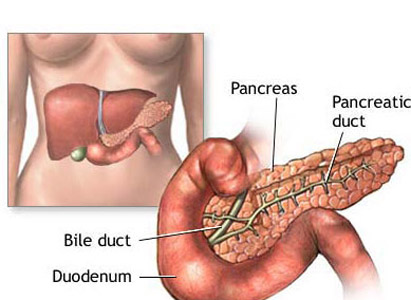
Symptoms of gallbladder cancer
1. Symptoms of enteron. Most patients (about 90%) develop dyspepsia, aversion to greasy food, belching, poor appetite and other symptoms because of functional defect of gallbladder, which means the patients cannot digest fatty material.
2. Pain in right upper abdomen. Over 80% gallbladder cancer patients are suffering from cholecystolithiasis at the same time that some similar symptoms of cholecystolithiasis or cholecystitis develop. Most cases would present the pain in right upper abdomen first, which would develop to constant vague or dull pain and occasionally accompanied by the paroxysmal acute pain that can extend to right shoulder.
3. Lump in right upper abdomen. About 50% patients develop the lump in right upper abdomen or upper abdominal regions, among them mostly are enlarged gallbladder.
4. Jaundice and skin itch normally appear in late stage of gallbladder cancer. Obstruction of bile duct resulted by cancer tissues encroaching on bile ducts or swelling metastatic lymph nodes depressing on bile ducts that the bile secreted by liver cannot enter intestines but flows black to blood would lead to yellow satin in skin and mucous membrane. And a patient with jaundice is normally accompanied by the skin itch that is hard to relieve and may aggravates at night.
5. Fever and emaciation. Around 25% patients would present fever, which causes from secondary infection of biliary tract. Cachexia may even develop in late stage patients as well.
Physical signs of gallbladder cancer
1. Jaundice
It appears as yellow stain in mucous membrane and skin severely and mainly because of obstructive jaundice. And jaundice normally is a sign of advanced cancer stage.
2. Lump in right upper abdomen
Smooth and swelling gallbladder can be touched in right upper abdomen when it is movable and without accretion of tissues around. But if accretion of peripheral tissues occurs, normally several lumps, even swelling liver or the lumps of duodenum obstruction are palpable.
Specialists from Modern Cancer Hospital Guangzhou remind you that once above mentioned symptoms occur, please have examination in hospital as soon as possible.
Auxiliary examinations of gall bladder cancer
1. Ultrasound examination. Ultrasound B is the first choice in gallbladder cancer examinations, with an accuracy of over 90%, it is easy and harmless, and can apply repeatedly.
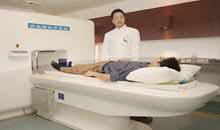
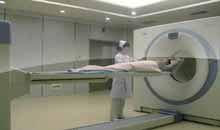
2. CT scan. Its confirmed diagnostic rate of early gallbladder cancer is not as accurate as Ultrasound. However, to those patients who are highly suspected suffering gallbladder cancer in ultrasound examination, enhanced CT scan is necessary to perform for confirmation. If the tumor encroaches on liver or relative lymph nodes, it can be showed in CT scans.
3. Usually, not being the first or necessary examination in detecting gallbladder cancer, Nuclear Magnetic Resonance Imaging(MRI) would only apply to confirm if liver or other organs are infected, or when a patient develops obstructive jaundice. Even its accuracy is similar to CT scan, but it got the advantage of non-radiographic inspection which means it can be performed for times.
4. PET-CT as an examination to relatively confirm the malignancy of tumor. With the exclusion of acute cholecystitis, this examination helps to confirm the malignancy of the space-occupying lesions in gallbladder and can detect if other lesions existing besides the ones in gallbladder.
5. Laboratory tests. When canceration occurs from the lesions of gallbladder, normally the indexes of tumor marker would increase. Testing serum tumor marker range is helpful to diagnose the malignancy of gallbladder cancer. But it won’t present increases tumor marker indexes in early stage of this cancer.

Disease diagnosis of gallbladder cancer
Without any typical early symptoms, it is hard to diagnose gallbladder cancer. Most patients clinically would develop the symptoms similar to chronic cholecystitis or cholelithiasis. And the main symptom presents as pain in right upper abdomen, which could extends to right scapular region and is accompanied by poor appetite, lack of power, abdominal distension, low-grade fever, nausea, jaundice and so on. To the female patients with the history of cholelithiasis and chronic cholecystitis should considered to be gallbladder cancer patient when the pain varies to constant dull pain in right upper abdomen and aggravates progressively, or lump of gallbladder is touched locally, other obvious symptoms like progressive jaundice and emaciation occur obviously. The patients of late stages may develop the symptoms like swelling liver, space occupying lesion of liver, ascites, caahexy and so no, which are easily mistaken as liver cancer, pancreas cancer and bile duct cancer
Specialists from Modern Cancer Hospital Guangzhou reminded that, if space-occupying lesions or irregular thickening occur in gallbladder wall are detected through ultrasound examination, a patient shall further have chemical or other examinations to confirm whether it is gallbladder cancer.
Gall bladder cancer is a malignancy that threatens the life of its victims. Therefore, the treatment for gallbladder cancer should be timely. Then what are the treatments for gallbladder cancer? We will introduce the treatments of gallbladder cancer below.

Surgery of gallbladder cancer
Surgery is the first choice for early gallbladder cancer patients. As long as the condition of a patient allows, surgery should perform to remove the infected parts or even possibly the whole gallbladder based on pathological report. Generally it is thought that when the muscular layer of gallbladder is infected, the region has to remove should extend, including liver tissues closed to gallbladder and soft tissues of hepato-duodenal ligament, and extra-hepatic and biliary excision should be performed when the extra-hepatic bile tract of a patient is involved. To those gallbladder patients in late stages, the treatments should base on individual condition. And the patients who thought to have lymph node metastases, even extend the surgical region, it cannot help to extend their long-term survival rate.
Medication of gallbladder cancer
The therapeutic effect of current chemical medicines for gallbladder cancer is not ideal that the medicine for enteron tumors can be taken as reference. And the medicine of immune enhancement can be the adjunctive therapy of gallbladder cancer.
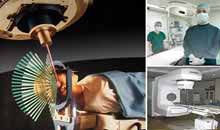
Radiotherapy for gallbladder cancer
Radiotherapy can control the growth of cancer remaining or current tumors to extend the life of patient relatively.
Gene-target therapy for gallbladder cancer
Gene-target therapy is to kill cancer cells selectively inside patient body by choosing correspondent medicine. It specially focuses on gallbladder cancer and other parts affected.
Traditional Chinese medicine for gallbladder cancer
To match definite traditional Chinese medicines against the pathomechanism of gallbladder cancer can take the effect of heat-clearing and detoxicating to kill cancer cells. Traditional Chinese medicine aims at local treatment while it attaches importance in regulation of general functions. Through oral intake or arterial transfusion, it supports healthy energy to eliminate diseases, benefits vital energy and blood nourishing, and regulates appetite, which improves immunity and fight against the cancer cells at the same time.
According to specialists from Modern Cancer Hospital Guangzhou, pathological changes of gallbladder can be detected in early stage as ultrasound devices improving and prevailing. Therefore, the incidence of gallbladder cancer is cut down maximally with timely treatment. Even for the changes from early stages, the prognosis is good through correct treatment. However the therapeutic effect is unhappy to those gallbladder cancer patients of middle and late stages. Since most patients have missed the best chance of treatment in early stage that the cancer develops to late stages. In such a case, excessive and positive treatments not only cannot help a patient to extend his life, instead, would lower the living quality of patient and shorten the life span.
If you have any questions, please contact us via online consultation, email or phone call. If you find our website useful, please follow our FaceBook and YouTube, health information will be updated regularly.