 09628389559


On September 23, the inauguration ceremony for the "Hematologic Oncology Specialty Collaboration—CAR-T Cell Therapy Joint International Center" was held
Professor Li Yuhua, Director of the Department of Hematology at Zhujiang Hospital of Southern Medical University and Director of Guangdong Provincial Engineering Research Center for Precision Immune Cell Technology; Professor Liang Zhao of the Hematologic Oncology Medical Group; Professor Yang Jilong of the Department of Hematology; Mr. Lin Zhicheng, Standing Council Member of the Chinese Anti-Cancer Association; Mr. Lin Daoxuan, Vice President and Medical Director of St. Stamford International Medical Group; Ms. Jin Nongyi, Assistant to the President and Chief Administrative Officer of St. Stamford International Medical Group; Mr. Lin Xinwei, General Manager of Modern Cancer Hospital Guangzhou; Mr. He Langbing, Director of International Affairs and Vice President; Professor Song Shijun, Vice President and Chief Expert of Oncology; Director Dai Wenyan, Director of the Zhujiang Hematologic Oncology CAR-T Cell Therapy International Medical Joint Center; and other relevant persons in charge attended the inauguration ceremony and discussion.
As a Zhujiang hematologic oncology specialty collaboration partner, both parties will further strengthen cooperation, jointly explore a new model that combines frontier cell therapy with international medical services, and build a closer connection between professional medical resources and the international patient service system.
For international patients, the treatment of hematologic malignancies, especially relapsed/refractory hematologic malignancies, often faces multiple challenges such as the distribution of medical resources, cross-border medical costs, and the coordination of specialized diagnosis and treatment. In recent years, with the continuous development of cell therapy technologies, CAR-T cell therapy has provided new treatment options for some patients with hematologic malignancies, but medical institutions and professional teams capable of providing such diagnosis and treatment remain relatively limited. In the past, some patients from Asia and Southeast Asia seeking frontier treatment for hematologic malignancies may have needed to travel to regions with concentrated medical resources such as Europe and the United States to receive treatment over long distances. However, patients from different regions differ considerably in disease characteristics, prior treatment history, healthcare systems, and treatment needs. Therefore, for international patients, how to obtain professional, standardized cell therapy services in Asia that match their own medical needs has also become an important issue requiring attention in cross-border medical services.
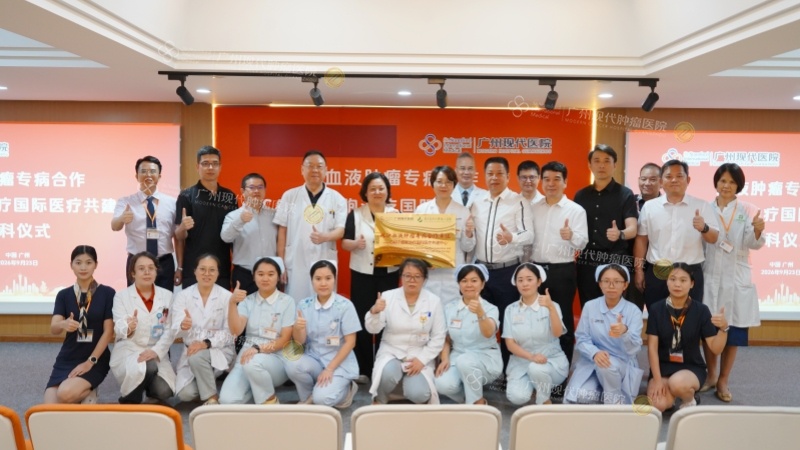
A New Chapter Together: CAR-T Cell Therapy Joint International Center Officially Launched
At the ceremony, both parties jointly witnessed the official launch of the "Zhujiang Hematologic Oncology Specialty Collaboration—CAR-T Cell Therapy Joint International Center."
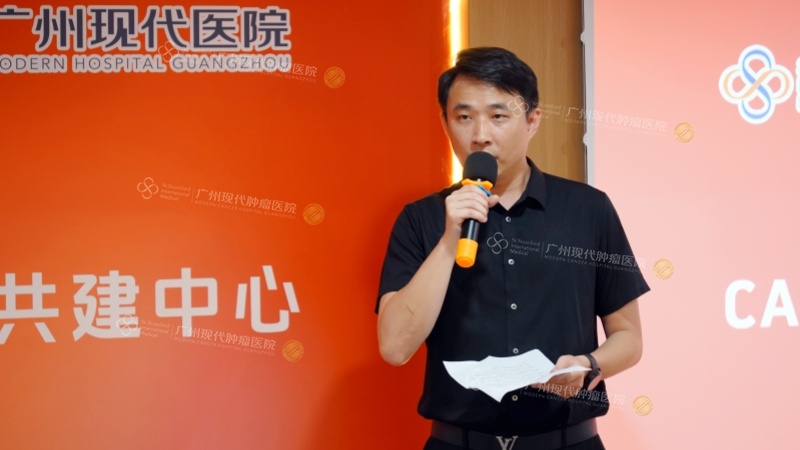
During the speech session, Mr. Lin Xinwei, General Manager of Modern Cancer Hospital Guangzhou, said that hematologic oncology specialties and CAR-T cell therapy are areas that the hospital has long focused on and hopes to make key breakthroughs in.
At the ceremony, she shared relevant clinical research papers and academic achievements of the hematologic oncology team at Zhujiang Hospital of Southern Medical University, and around CAR-T treatment cases of patients with relapsed/refractory hematologic malignancies, she mentioned that some patients who once had limited treatment options achieved good efficacy after standardized assessment and individualized CAR-T therapy, with stable long-term follow-up, further confirming the importance of standardized assessment, full-course management, and multidisciplinary collaboration.
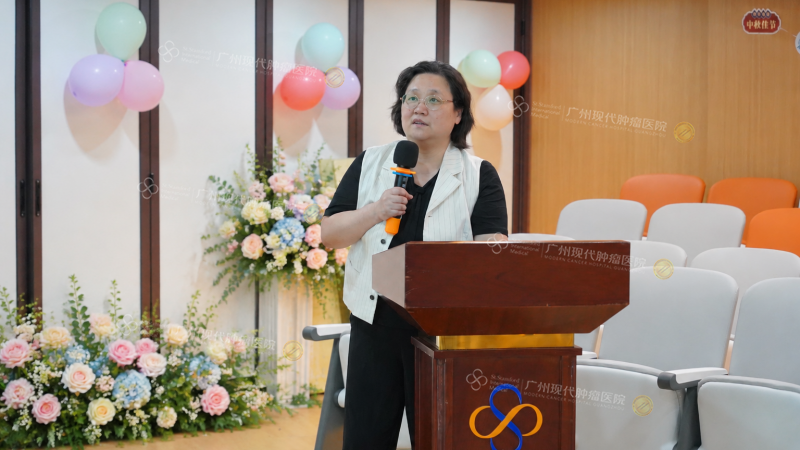
(Li Yuhua, Director of Guangdong Provincial Engineering Research Center for Precision Immune Cell Technology)
CAR-T cell therapy provides new treatment options for some patients with relapsed/refractory hematologic malignancies. For international patients from Southeast Asia, South Asia, and other regions, in addition to the treatment technology itself, the cross-border medical process also involves a series of practical needs such as organizing medical records, remote assessment, expert consultation, treatment coordination, language communication during treatment, and follow-up. Modern Cancer Hospital Guangzhou has long served international patients from Asia and other regions and has accumulated relatively rich practical experience in multilingual medical services, cross-border medical coordination, and full-process services for international patients. This joint development is based on the complementarity of both parties' advantages: Zhujiang Hospital provides professional strength in the fields of hematologic oncology and CAR-T cell therapy, while Modern Cancer Hospital Guangzhou gives play to its advantages in international medical services and patient management, further promoting the effective connection between frontier treatment technologies and the international patient service system, so that international patients with relevant treatment needs can obtain more standardized and continuous diagnosis and treatment support.
Focusing on Frontier Technologies to Explore a New Model of Hematologic Oncology Diagnosis and Treatment and International Services
With the continuous development of oncological medicine, frontier technologies represented by cell therapy and precision therapy are continuously expanding treatment options in the field of hematologic oncology diagnosis and treatment. For international patients, obtaining frontier treatment requires not only professional medical teams and standardized diagnosis and treatment technologies, but also full-process medical services that match cross-border medical care. From pre-treatment medical record organization and remote condition assessment to expert consultation, treatment plan coordination, multilingual communication during treatment, and continuous follow-up after treatment, international patients place higher demands on the coordination between medical technology and the service system.
Modern Cancer Hospital Guangzhou has long provided medical services to overseas patients, covering many countries and regions such as Southeast Asia, South Asia, and Central Asia, and has formed a corresponding service system in international patient medical consultations, condition information organization, telemedicine collaboration, treatment coordination, multilingual services, and post-treatment follow-up. This cooperation with Zhujiang Hospital of Southern Medical University in hematologic oncology and CAR-T cell therapy is precisely intended to further combine professional hematologic oncology diagnosis and treatment capabilities with a mature international medical service system, so that international patients can obtain smoother and more continuous cross-border medical services while seeking frontier treatment.
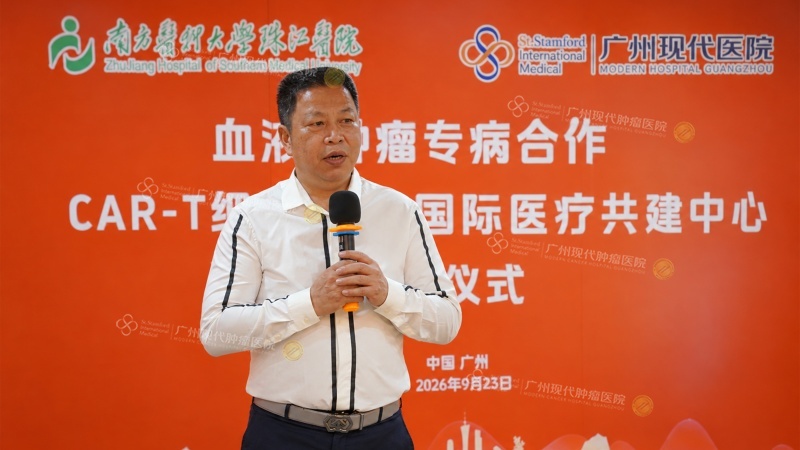
(Lin Zhicheng, Standing Council Member of the Chinese Anti-Cancer Association)
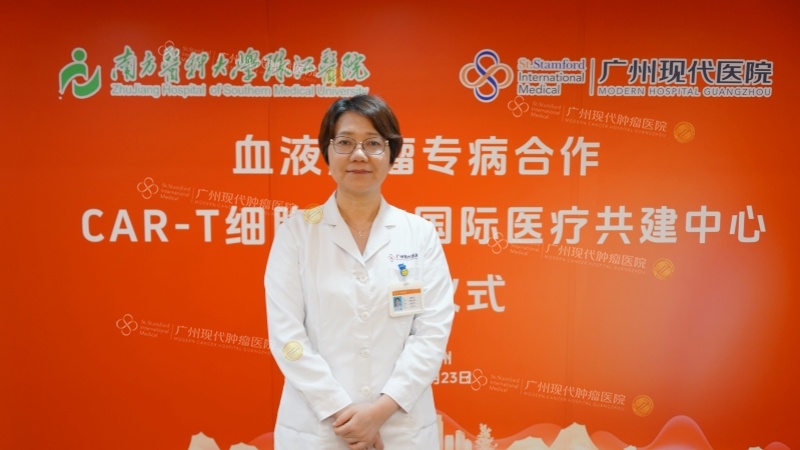
(Dai Wenyan, Director of the Zhujiang Hematologic Oncology CAR-T Cell Therapy International Medical Joint Center)
The launch of this center aims to build a collaborative platform for frontier technologies in hematologic oncology, promote the standardized application of CAR-T cell therapy and multidisciplinary collaboration, and facilitate the interconnection and sharing of clinical resources, expert resources, and international patient service resources. In the future, the center will rely on the advantages of both parties to continue exploring professional exchanges, patient diagnosis and treatment collaboration, international patient services, and academic exchanges.
Joining Hands with Peers to Benefit Patients and Embark on a New Journey in Oncological Medicine
During the discussion, leaders and experts from both hospitals conducted in-depth exchanges on hematologic oncology diagnosis and treatment, CAR-T cell therapy, medical resource collaboration, and international patient services. Both parties agreed that, taking this joint development as a starting point, they should establish a regular communication and collaboration mechanism, and around the professional development of the hematologic oncology field and the actual needs of patients, promote a closer collaboration mechanism among expert resources, medical resources, and international patient service resources.
For Modern Cancer Hospital Guangzhou, this joint development is not only the establishment of a center, but also a leap in the hospital's disciplinary layout, service capacity, and international cooperation demonstration. Driven by Zhujiang Hospital of Southern Medical University's academic leadership and clinical advantages in the CAR-T field, our hospital will train its team, accumulate standards, and cultivate characteristics in the collaborative diagnosis and treatment of complex hematologic malignancies, transform years of international service experience into replicable service standards and disciplinary capabilities, and form a differentiated advantage featuring "frontier technologies that can be undertaken, international needs that can be responded to, and distinctive services that can be consolidated."
Introduction to Zhujiang Hospital of Southern Medical University
Zhujiang Hospital of Southern Medical University, founded in 1947, is a large comprehensive tertiary Grade A hospital integrating medical care, teaching, scientific research, prevention, healthcare, and rehabilitation. The hospital has a complete range of disciplines and strong comprehensive strength, with multiple national and provincial key clinical specialties and high-level research platforms, and has formed distinctive advantages in the diagnosis and treatment of complex and critical diseases, minimally invasive techniques, organ transplantation, neuroscience, orthopedics, urology, and hematologic oncology. As one of the important centers for medical talent training, scientific research, and clinical diagnosis and treatment in South China, the hospital continues to promote the coordinated development of medical care, teaching, and research, serving the Guangdong-Hong Kong-Macao Greater Bay Area and the whole country. Its Department of Hematology and CAR-T Center have deep accumulations in standardized diagnosis and treatment of hematologic malignancies, application of cell therapy technologies, and full-course management, providing solid professional support for the joint development of this international center.
South China CAR-T Cell Therapy Professional Platform
Relying on the long-term accumulation of Zhujiang Hospital of Southern Medical University in hematologic oncology diagnosis and treatment and cell therapy, its Department of Hematology has carried out clinical research related to CAR-T cell therapy since 2015 and led the establishment of the "South China CAR-T Cell Therapy Alliance" in 2017, continuously promoting the clinical research and application of CAR-T cell therapy.
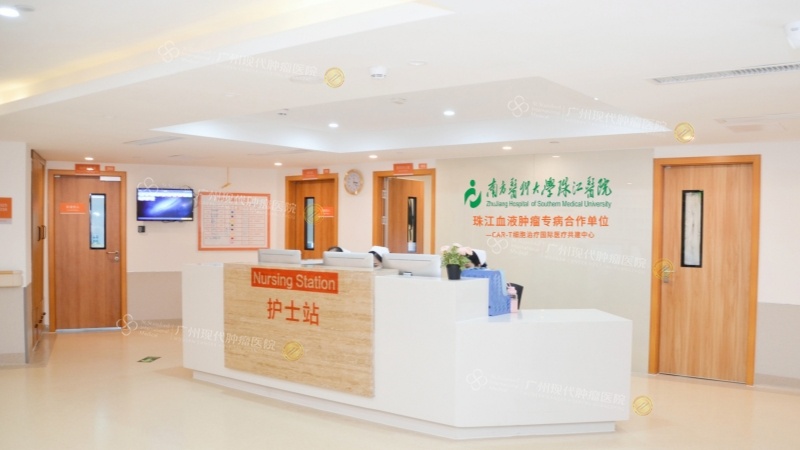
(CAR-T Cell Therapy International Medical Joint Center)
This joint development of the international center will further give play to Zhujiang Hospital's professional advantages in the fields of hematologic oncology and cell therapy, combine them with Modern Cancer Hospital Guangzhou's international medical service system, promote the effective connection between frontier cell therapy technologies and international patient services, and provide more standardized and diversified diagnosis and treatment support for relevant patients.
*Surgery, in addition to the appropriate chemotherapy and radiotherapy, are effective in treating early cancer, but certain patients in late stage of cancer may not be tolerate surgery well as they can be relatively weak. A combination of carefully planned minimally invasive therapy, chemotherapy or radiotherapy can effectively reduce the side effects and discomfort of treatment and may help patient get better efficacy.