 09628389559


Who can understand the suffering of advanced pancreatic cancer—severe pain, rapid weight loss, and the inability to eat?
These are not abstract descriptions. They were the reality D faced every single day after his diagnosis. In June 2023, a sudden, persistent pain in his upper abdomen shattered his peace. Within just a few months, he lost nearly 15 kg, growing weaker by the day. Then, in late September of the same year, the diagnosis of pancreatic cancer cast a heavy shadow over his entire family.
In a hospital in Mongolia, he underwent two rounds of chemotherapy 21 days apart, but his condition did not improve significantly. Determined to find better treatment options, he traveled to South Korea, where he received three rounds of chemotherapy at 14-day intervals. Although his abdominal pain eased slightly, his visa expired and the cost—over a million yuan—forced him to stop treatment.
Even more discouraging, doctors in both Mongolia and South Korea recommended open surgery—a procedure that is highly traumatic, requires slow recovery, and places immense physical burden on the patient. JAMSRANJA BAYARSAIKHAN was unwilling to accept this. After returning to Mongolia, his health continued to decline. Abdominal pain recurred, and he also suffered from hair loss, constipation, and extremely poor appetite. His cancer battle had become an uphill struggle.
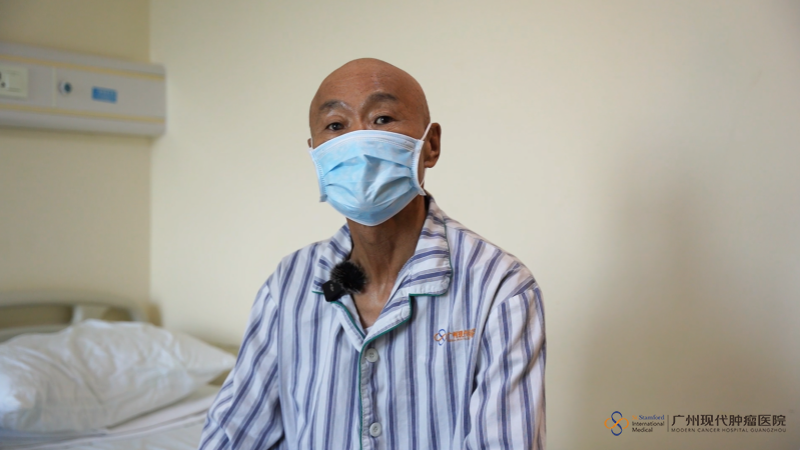
JAMSRANJA BAYARSAIKHAN
Crossing Borders to Guangzhou: Integrated Minimally Invasive Treatment Brings New Hope
Just when he saw no way forward, Bai Yirisai learned through Modern Cancer Hospital Guangzhou’s International Service Center in Mongolia that the hospital offers various minimally invasive treatment options, including interventional therapy and seed implantation—without the need for open surgery. The treatment cost is also much lower than in South Korea. With full support from his family, he decided to travel to Guangzhou for treatment.
Traveling from Mongolia to Guangzhou, language barriers and seeking treatment in a foreign country could have been daunting challenges. Yet the hospital provided thoughtful support every step of the way: private airport transfers, 24/7 interpreter accompaniment, and fully equipped, comfortable wards. All his fears and unease were instantly eased, making him feel as safe and warm as if he were at home.
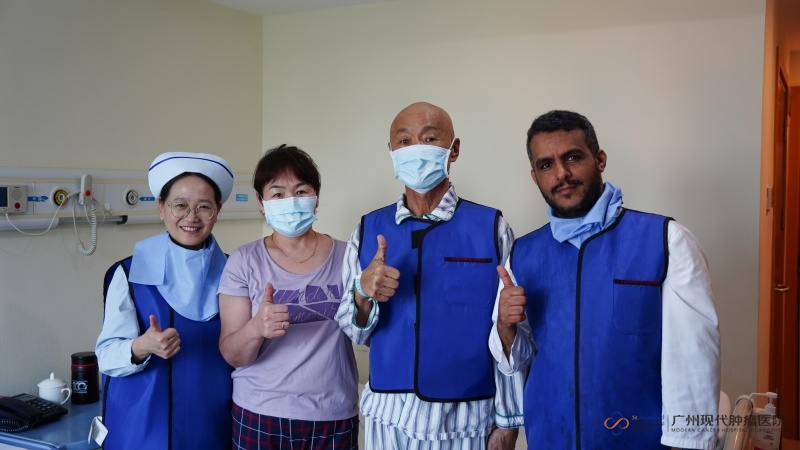
JAMSRANJA BAYARSAIKHAN with his wife and the medical team
Minimally invasive combined therapy delivers results: pain relieved, tumor effectively controlled
Upon admission, JAMSRANJA BAYARSAIKHAN was suffering from severe abdominal pain and relied on painkillers just to find relief. The hospital’s MDT expert team carefully evaluated his condition and designed a comprehensive treatment plan centered on interventional arterial infusion chemotherapy, combined with seed implantation. The approach advances on two fronts simultaneously: “precise local control” and “improving overall condition.” The goal is to control the tumor while preserving the body’s tolerance and capacity for recovery.
After receiving standardized minimally invasive combination therapy, JAMSRANJA BAYARSAIKHAN condition began to improve remarkably. Following three sessions of interventional therapy, his abdominal pain was significantly reduced. He then underwent seed implantation: under image guidance, radioactive seeds were precisely placed into the tumor, continuously releasing radiation to destroy cancer cells. Just 24 hours after the procedure, he was already able to move freely—recovering far faster than expected.
It was the synergistic effect of interventional therapy and seed implantation—not a single minimally invasive technique—that effectively controlled the tumor activity. Overall, side effects were mild, with almost no impact on his appetite or daily life. The treatment experience was far better than that of conventional chemotherapy.
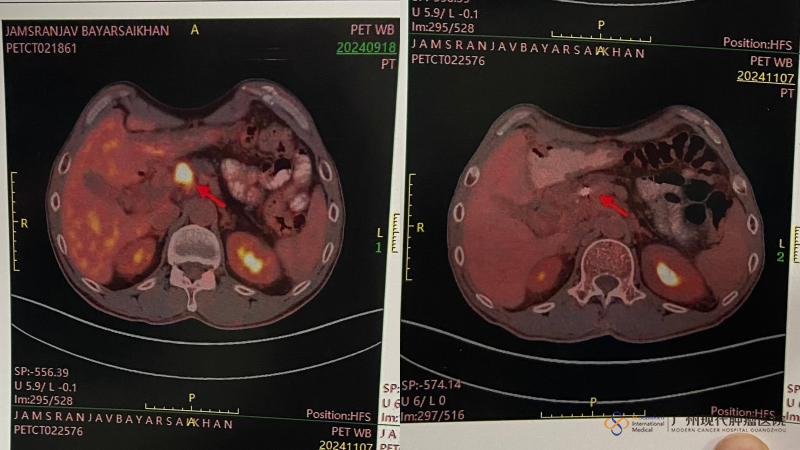
CT Comparison: Before and After Treatment
Dr. Adnan, the attending physician, recalls that when JAMSRANJA BAYARSAIKHAN first arrived, his tumor activity was extremely high (SUVmax 9.0). After two sessions of interventional therapy and one session of seed implantation — a combined minimally invasive approach — follow-up scans showed that tumor activity had dropped significantly, with SUV levels falling to a low range. In addition, the lymph node lesions in the retroperitoneal and hilar regions had shrunk and shown reduced metabolic activity.
Dr. Adnan, notes that minimally invasive treatments offer precision, fewer side effects, and faster recovery. They are especially suitable for advanced pancreatic cancer patients who cannot tolerate major surgery. Even in complex cases, such a comprehensive minimally invasive strategy can deliver remarkable results and greatly improve the patient's quality of life.
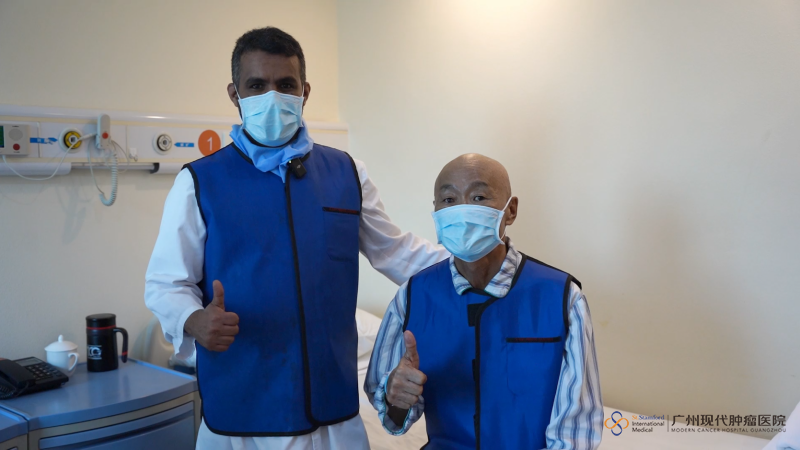
JAMSRANJA BAYARSAIKHAN with his attending physician Dr. Adnan
Going Home with Hope: You Are Not Alone
Today, JAMSRANJA BAYARSAIKHAN no longer needs painkillers. He has basically returned to normal in terms of eating and moving around, and his mental state and mood feel completely renewed. Grateful from the heart, he praises every staff member at Modern Cancer Hospital Guangzhou — the professional doctors, the attentive nurses, the thoughtful interpreters and support staff, and even the friendly housekeepers. Their caring support every step of the way made his medical journey in a foreign country truly warm and comforting.
The wife, who stayed by his side throughout the treatment, also shared her feelings. In Mongolia and Korea, open surgery would have required enormous caregiving efforts from the family. But during the minimally invasive comprehensive treatment at Modern Cancer Hospital Guangzhou, JAMSRANJA BAYARSAIKHAN remained largely self-sufficient. This greatly eased the family’s burden and made the entire treatment process more sustainable.
Reflecting on his journey, JAMSRANJA BAYARSAIKHAN wouldn’t call it a "miracle" — but rather, a critical choice made at the right time. His message to fellow Mongolians: If you feel unwell, seek early diagnosis and timely treatment. Modern Cancer Hospital Guangzhou offers a variety of minimally invasive treatment options — no open surgery, less pain, and proven results. It is a choice you can trust.
His wife also encourages other patients’ families: Stay positive and optimistic. With the right treatment plan suited to your condition, you will always find your own way forward in the fight against cancer.
*Surgery, in addition to the appropriate chemotherapy and radiotherapy, are effective in treating early cancer, but certain patients in late stage of cancer may not be tolerate surgery well as they can be relatively weak. A combination of carefully planned minimally invasive therapy, chemotherapy or radiotherapy can effectively reduce the side effects and discomfort of treatment and may help patient get better efficacy.